Imagine returning to your parked car after unexpected heavy rainfall in Dubai, only to discover water has invaded your vehicle’s interior. The carpets are soaked, warning lights flicker on the dashboard, and panic sets in. In a city where flash floods can transform streets into rivers within minutes, water damage to vehicles is an unfortunate reality that demands immediate, specialized attention.
At Metamechanics, we deliver comprehensive flooded car repair service in Dubai because we understand the urgency and complexity of water damage restoration. Whether your vehicle has experienced minor water seepage or significant submersion, our certified technicians employ systematic restoration protocols to salvage your investment and restore your vehicle to safe, reliable condition.
Understanding Flooded Car Damage: What Happens Beneath the Surface
The Invisible Destruction:
When water enters your vehicle, it initiates a cascade of destructive processes that worsen over time:
Electrical System Damage:
-
Modern vehicles contain 50-100 electronic control modules
-
Water causes immediate short circuits and progressive corrosion
-
Wiring harnesses trap moisture, leading to intermittent failures
-
Safety systems like airbags and ABS may become compromised
-
Corrosion continues even after surfaces appear dry
Mechanical System Contamination:
-
Water in engine oil leads to bearing failure
-
Transmission fluid contamination causes shifting issues
-
Brake fluid contamination compromises stopping power
-
Fuel system water contamination causes drivability problems
-
Differential and transfer case damage in 4×4 vehicles
Interior and Structural Degradation:
-
Mold and mildew develop within 24-48 hours
-
Corrosion begins on unprotected metal surfaces
-
Sound-deadening materials trap moisture permanently
-
Electrical connectors corrode from within
-
Persistent musty odors become permanent
The Dubai-Specific Challenge:
| Factor | Impact on Flooded Vehicles |
|---|---|
| Flash Flood Reality | Sudden water accumulation can overwhelm vehicle seals and intake systems |
| Salt Water Risk | Coastal areas face accelerated corrosion from seawater exposure |
| Temperature Fluctuations | Dubai’s rapid temperature swings accelerate moisture-related deterioration |
| Premium Vehicle Concentration | High-value vehicles require specialized restoration expertise |
| Desert Dust Interaction | Water mixed with dust creates abrasive slurry damaging components |
Signs Your Vehicle Needs Flooded Car Damage Repair
Immediate Warning Signs (Do Not Drive):
| Warning Sign | What It Indicates | Action Required |
|---|---|---|
| Visible water inside cabin | Seal failure or submersion | Professional assessment immediately |
| Engine won’t crank or unusual sounds | Possible hydrolock | Do not attempt to start—tow immediately |
| Multiple dashboard warning lights | Electrical system compromise | Professional diagnostics required |
| Water in engine bay | Intake or electrical exposure | Comprehensive inspection needed |
| Unusual engine sounds after water | Water ingestion | Stop operation immediately |
Delayed Symptoms (Appear Days to Weeks Later):
-
Intermittent electrical issues—lights flickering, windows working sporadically
-
Musty odors indicating trapped moisture in carpets or HVAC system
-
White, green, or blue corrosion residue on visible connectors
-
Unexplained warning lights appearing and disappearing
-
Reduced engine performance or unusual transmission behavior
-
Fogging on interior windows that doesn’t clear with defroster
-
Air conditioning system developing unusual smells
Our Complete Flooded Car Damage Repair Protocol
Phase 1: Comprehensive Damage Assessment
When your water-damaged vehicle arrives at our facility, we conduct a systematic evaluation:
Water Type Identification:
-
Fresh Water: Rain or tap water—best restoration prognosis
-
Salt Water: Coastal or seawater—requires extensive corrosion prevention
-
Contaminated Water: Sewage or floodwater—requires sanitation protocols
Submersion Level Classification:
| Level | Description | Restoration Approach |
|---|---|---|
| Level 1 | Floor-level water only | Interior drying, basic electrical inspection, carpet extraction |
| Level 2 | Water up to seat level | Complete interior removal, module cleaning, fluid changes |
| Level 3 | Water up to dashboard | Extensive module replacement, full interior restoration |
| Level 4 | Full submersion | Total component evaluation, significant replacement required |
System Impact Analysis: Identifying all affected systems—electrical, mechanical, safety, interior, HVAC
Time Since Exposure Assessment: Critical factor determining restoration viability
Insurance Coordination: Comprehensive documentation for claim processing
Phase 2: Electrical System Recovery & Protection
The electrical system is the most vulnerable component in flooded vehicles:
Immediate Power Isolation:
-
Battery disconnection to prevent ongoing short circuits
-
System discharge to eliminate residual current
-
Safety system verification before any work
Module Extraction and Professional Drying:
-
Removal of all electronic control units
-
Controlled-environment drying in temperature-regulated chambers
-
Professional circuit board inspection
-
Module testing and validation
Connector Cleaning Protocol:
-
Specialized electrical contact cleaning for all affected connections
-
Dielectric grease application for long-term corrosion protection
-
Pin and terminal inspection for corrosion damage
-
Replacement of compromised connectors
Wiring Harness Evaluation:
-
Comprehensive inspection of all wiring looms
-
Resistance testing for corrosion-induced impedance
-
Replacement of compromised harness sections
Phase 3: Interior Water Extraction & Complete Drying
Professional Water Extraction:
-
Industrial-grade wet/dry vacuum systems
-
Multiple extraction passes for complete saturation removal
-
Targeted extraction for carpet padding
Complete Interior Removal:
-
Carpet extraction for separate drying or replacement
-
Padding and sound-deadening material removal
-
Seat removal for proper drying
-
Trim panel removal for behind-panel drying
Industrial Drying Equipment:
-
High-capacity air movers positioned throughout cabin
-
Commercial dehumidifiers for moisture extraction
-
Temperature-controlled drying environment
-
Moisture meters to verify complete drying
Mold Prevention Treatment:
-
Antimicrobial applications to all interior surfaces
-
HVAC system sanitization
-
Professional-grade fungicidal treatments
Odor Elimination:
-
Ozone treatment for persistent odors
-
Activated charcoal filtration
-
Professional interior shampoo and extraction
Phase 4: Mechanical System Assessment & Recovery
Engine Evaluation:
-
Crankshaft rotation verification
-
Cylinder borescope inspection for water evidence
-
Compression testing for engine integrity
-
Oil analysis for water contamination levels
-
Hydrolock damage assessment
Complete Fluid Replacement:
-
Engine oil and filter—minimum 2 flush cycles
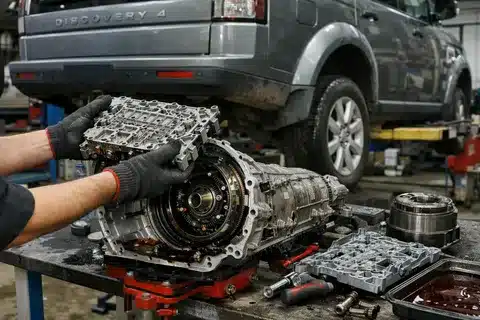
-
Transmission fluid—complete exchange with filter replacement
-
Brake fluid—complete system flush
-
Coolant system—drain, flush, and refill
-
Power steering fluid—complete exchange
-
Differential and transfer case fluid—drain and refill
Intake System Restoration:
-
Complete air intake disassembly and cleaning
-
Air filter housing inspection
-
Throttle body cleaning
-
Intercooler draining (turbocharged vehicles)
Exhaust System Evaluation:
-
Water removal from exhaust components
-
Catalytic converter inspection
-
Oxygen sensor inspection
Fuel System Service:
-
Fuel tank draining and cleaning
-
Fuel line flushing
-
Fuel filter replacement
Phase 5: Corrosion Prevention & Long-Term Protection
Underbody Restoration:
-
Professional pressure washing of undercarriage
-
Steam cleaning for contaminant removal
-
Rust inhibitor application to vulnerable areas
-
Brake line and fuel line inspection
Connector Protection:
-
Dielectric grease application to all electrical connections
-
Weatherpack seal inspection
-
Bulkhead connector cleaning
Cavity Protection:
-
Body cavity rust inhibitor application
-
Door panel internal treatment
-
Rocker panel and frame rail protection
-
Sunroof drain clearing
Phase 6: Comprehensive Validation & Quality Assurance
Electrical System Validation:
-
Full system function testing
-
Module communication verification
-
Battery and charging system testing
-
CAN bus integrity verification
Safety System Verification:
-
Airbag module function confirmation
-
Seatbelt pretensioner inspection
-
ABS and stability control system testing
-
Brake system function verification
Mechanical Validation:
-
Engine performance testing under load
-
Transmission operation verification
-
Cooling system pressure testing
-
A/C system performance validation
Road Testing:
-
Extended evaluation under Dubai driving conditions
-
Highway speed performance verification
-
Stop-start traffic simulation
-
A/C performance in peak conditions
Vehicles We Service for Flooded Car Damage Repair
| Category | Makes |
|---|---|
| European Luxury | Mercedes-Benz, BMW, Audi, Porsche, Land Rover, Jaguar, Volvo, Bentley, Rolls-Royce |
| Japanese & Korean | Toyota, Lexus, Nissan, Infiniti, Honda, Acura, Mitsubishi, Hyundai, Kia, Genesis |
| American | Cadillac, Chevrolet, Ford, Dodge, Jeep, GMC, Lincoln, Tesla |
| Chinese | Haval, MG, GAC, Hongqi, Jetour, Geely, BYD, Chery |
| Supercar & Exotic | Ferrari, Lamborghini, McLaren, Maserati, Aston Martin |
| Commercial | Light trucks, vans, fleet vehicles, 4×4 off-road vehicles |
The Critical Window for Restoration Success
| Time After Exposure | Damage Progression | Restoration Outcome |
|---|---|---|
| 0-6 hours | Initial water penetration, limited corrosion | Excellent—minimal component replacement |
| 6-24 hours | Electrical corrosion begins, mold starts | Good—module cleaning required |
| 24-72 hours | Significant electrical damage, mold established | Moderate—multiple components may need replacement |
| 3-7 days | Extensive corrosion, safety system compromise | Limited—high cost, reduced certainty |
| Beyond 7 days | Permanent damage to multiple systems | Significant replacement required |
Critical Actions:
| DO | DO NOT |
|---|---|
| Document everything with photographs | Attempt to start the engine |
| Call for professional assessment immediately | Drive the vehicle before professional inspection |
| Contact your insurance provider promptly | Attempt DIY drying with household equipment |
| Tow vehicle to a specialized restoration facility | Ignore warning lights or unusual symptoms |
Investment Considerations for Flooded Car Damage Repair
| Damage Level | Estimated Range | Services Included |
|---|---|---|
| Minor (Floor Level) | AED 1,500 – 3,500 | Interior drying, electrical cleaning, fluid inspection |
| Moderate (Seat Level) | AED 3,500 – 8,000 | Interior removal, module cleaning, fluid changes, corrosion prevention |
| Extensive (Dashboard Level) | AED 8,000 – 15,000 | Full interior replacement, extensive module cleaning/replacement, complete mechanical flushing |
| Severe (Full Submersion) | AED 15,000 – 30,000+ | Comprehensive restoration, significant component replacement |
Exact quotations provided after thorough vehicle assessment
Insurance Guidance for Flooded Vehicles
| Insurance Type | Flood Damage Coverage |
|---|---|
| Comprehensive Insurance | Typically covers flood and water damage |
| Third-Party Only | Does not cover damage to your own vehicle |
Claim Process:
-
Document immediately with photographs
-
Contact your insurer within 24 hours
-
Obtain professional assessment from our specialists
-
Authorize repairs through approved facility
-
We coordinate with insurers for seamless processing
We Work With All Major UAE Insurers:
-
AXA Insurance
-
Oman Insurance
-
RSA Insurance
-
Sukoon (Orient)
-
Abu Dhabi National Insurance
-
Emirates Insurance
-
All other major providers
Preventive Strategies for Vehicle Flood Protection
Before Flood Season:
-
Parking Awareness: Know flood-prone areas in your neighborhood
-
Insurance Review: Verify comprehensive coverage includes flood damage
-
Seal Inspection: Check door seals, window seals, sunroof drains
-
Emergency Contacts: Program towing and recovery contacts
During Heavy Rainfall:
-
Avoid Driving Through Standing Water: Even 6 inches can cause damage
-
Seek Higher Ground: Move vehicles to elevated parking
-
Monitor Weather Alerts: Pay attention to UAE weather warnings
-
Never Attempt to Start: If water has reached intake or electrical systems
After Water Exposure:
-
Do Not Start: If water has entered the engine bay or cabin
-
Call for Professional Assessment: Immediate evaluation is essential
-
Document Everything: Photograph conditions for insurance
-
Contact Your Insurer: Notify insurance provider as soon as possible
Frequently Asked Questions (FAQ)
Q1: Can any flooded car be fully repaired?
A: Restoration viability depends on water type (fresh vs. salt), submersion depth, time since exposure, and vehicle value. Fresh water, immediate response, and higher-value vehicles have the best restoration outcomes. Our assessment determines the most cost-effective path.
Q2: Is it safe to drive a flooded car?
A: We strongly advise against driving any vehicle that has experienced water intrusion until professional assessment. Electrical systems, brakes, and safety components may be compromised.
Q3: How quickly should I respond to flood damage?
A: Immediately. Electrical corrosion begins within hours. Mold develops within 24-48 hours. Insurance claims have time limitations. Prompt action significantly improves restoration outcomes.
Q4: Does insurance cover flood damage in Dubai?
A: Most comprehensive insurance policies cover flood and water damage. We work with all major UAE insurers to facilitate claim processing.
Q5: How long does flooded car repair take?
A: Minor damage: 3-7 days; moderate: 7-14 days; severe: 2-4 weeks depending on parts availability and damage extent.